South Korea will abolish its 78-year-old prosecution service Friday, but the agencies taking over its prosecution and major-crime investigation functions are approaching the launch without appointed chiefs.
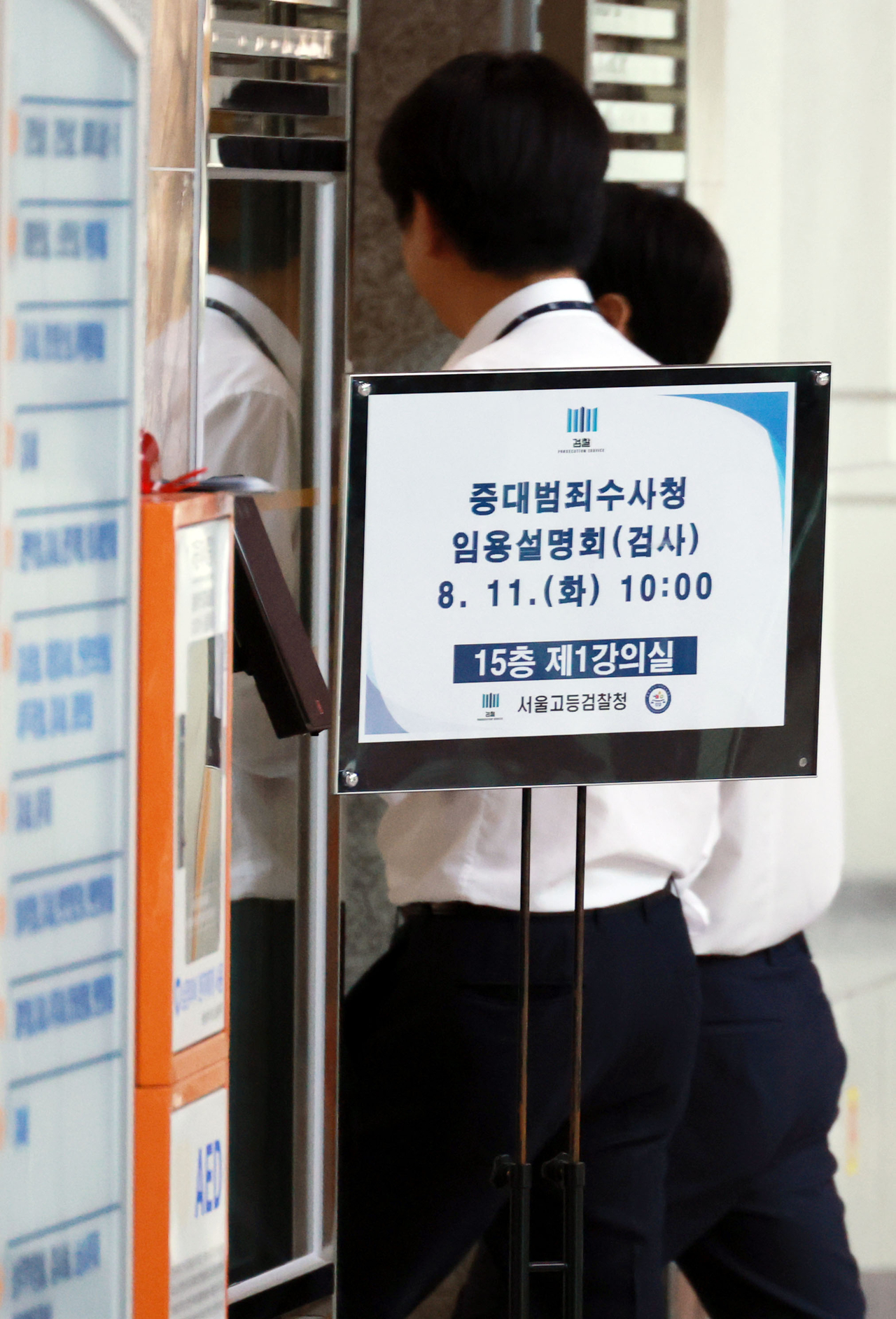
The new investigative agency has applications from prosecution staff equivalent to about two-thirds of its authorized workforce.
The Supreme Prosecutors' Office will seek warrants, decide whether to bring charges and handle cases in court.
The Serious Crimes Investigation Agency will investigate major offenses, including corruption and economic crimes, while police will continue to handle other criminal investigations.
Prosecutors will no longer conduct criminal investigations or supplementary investigations themselves. They will retain the power to request further investigation by other agencies.
President Lee Jae Myung has made the separation of investigation and prosecution a central part of his effort to curb abuses of prosecutorial power.
“The purpose of prosecution reform is to prevent the powers of investigative and prosecutorial agencies — meant to protect human rights and victims and maintain public order — from being abused for politically motivated investigations and indictments,” Lee said at a Sept. 18 press conference.
Chiefs still unappointed
Neither new agency has an appointed chief. The formal process of selecting the first head of the Supreme Prosecutors' Office has yet to begin.
The justice minister’s post is also vacant after nominee Kim Seung-won withdrew on Sept. 19 amid allegations including improper lobbying over a COVID-19 treatment trial, which he denied.
Lawyer Kim Ji-yong has been nominated to lead the Serious Crimes Investigation Agency. His appointment remains pending amid further vetting and objections within the ruling bloc over his record and views on prosecution reform.
Staffing poses another challenge. The investigative agency has 2,874 authorized posts, while 1,962 prosecutors and other prosecution service employees remained applicants after two rounds of special appointment applications. Their appointments have yet to be confirmed.
In the first round, 615 people withdrew their applications. The agency plans to select appointees by the end of September and recruit additional staff from outside the prosecution service.
“Not many prosecution staff want to join the new agency. The organization could change again under the next government, leaving the public to bear the brunt of the confusion,” Hong Joon-pyo, a former prosecutor and former mayor of Daegu, said on a Sept. 19 television talk show.
The Supreme Prosecutors' Office, meanwhile, is expected to open with about 1,900 prosecutors, below the current statutory ceiling of 2,292.
The Justice Ministry plans to leave vacancies unfilled as prosecutors depart or move to the investigative agency, then assess staffing needs before seeking a legal reduction in the quota.
yunapark@heraldcorp.com